Electric Vehicles in South Africa: The Fun Guide to the 2027 EV Shift

Electric vehicles in South Africa went from dinner-party curiosity to genuine talking point in 2026, and the timing is no accident: with petrol past R30 a litre and every second headline about fuel shocks, South Africans have started doing something very un-South African. They are reading the maths before buying the car. This is the friendly guide to what is actually happening with EVs in South Africa, what it really costs to run one, where the charging network is thin, and how to tell whether an electric car makes sense for your driveway or your business in 2027.
No brand worship. No green guilt. Just the numbers, the potholes and the plan, written in the same plain language we use with our own clients. Grab a coffee and let us read the road ahead.
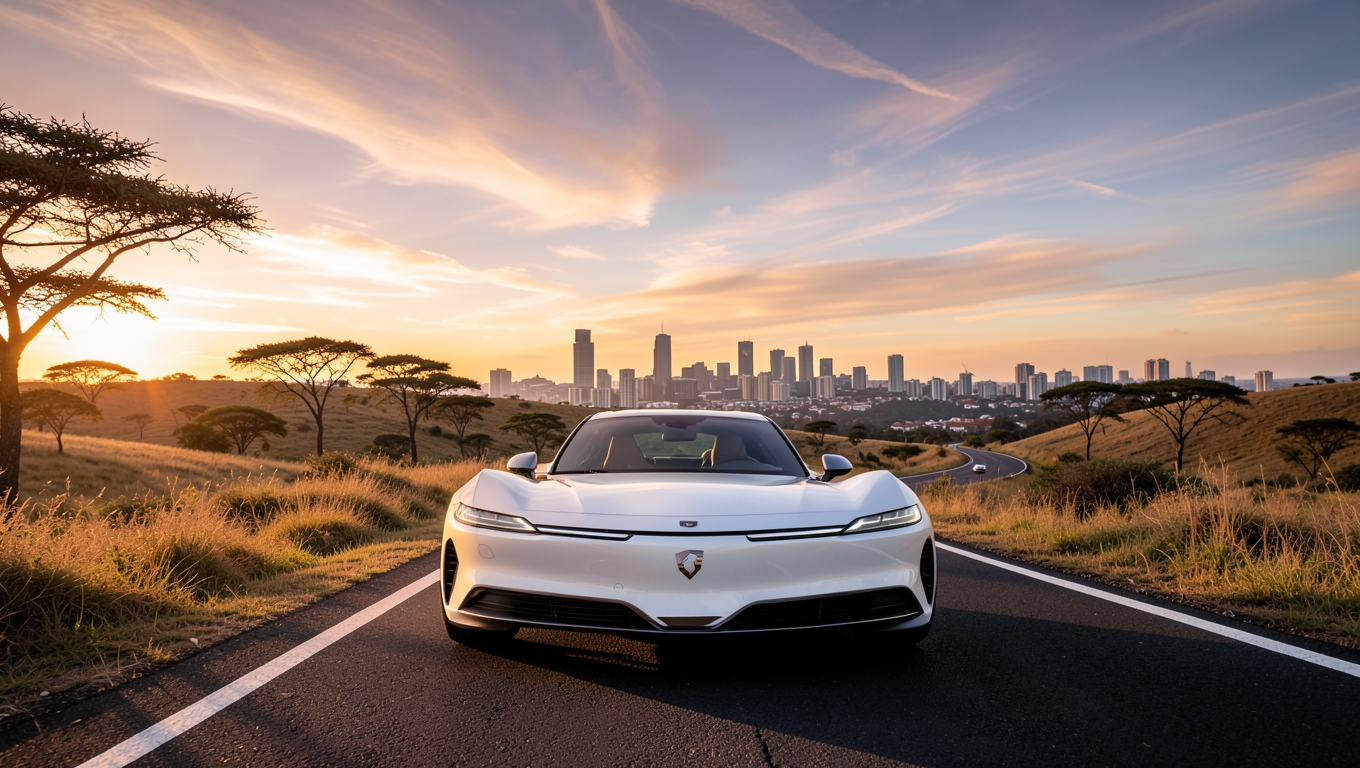
Electric cars in South Africa: the quietest revolution ever to hit the M1.
The Short Version: EVs in South Africa in 60 Seconds
The numbers jumped. South Africa sold 18,945 electrified vehicles in the first eight months of 2026, already 13.4% more than the whole of 2025, according to naamsa's September 2026 report. Roughly one in twenty new vehicles sold this year has a plug or a battery assist.
The maths is the advert. Home charging runs around R0.60 to R0.80 per kilometre, public fast charging around R1.20 to R1.50, against more than R3 per kilometre for a petrol car at today's record pump price.
The network is the catch. About 650 public chargers across roughly 445 sites, against around 5,000 petrol stations. Fine for city life, planable for road trips, still thin in the bundu.
Government is betting on it. A 150% tax deduction for EV and hydrogen production investment landed in March 2026, though there is still no consumer rebate.
Businesses are moving first. Fleet operators and SMEs are running the numbers on running costs, and that is where 2027 gets interesting.
South Africans are not buying electric cars because they love technology. They are buying them because they can read a fuel receipt.
Signal | 2025 | 2026 so far |
Electrified vehicles sold (Jan to Aug) | 16,703 full year | 18,945 in eight months |
Plug-in hybrids | 2,810 full year | 6,919 by August |
Battery electric cars | 1,088 full year | 2,622 by August |
Total new vehicle market (September) | 54,706 units | 61,645 units, up 12.7% |
Why Is Everyone Suddenly Talking About Electric Cars?
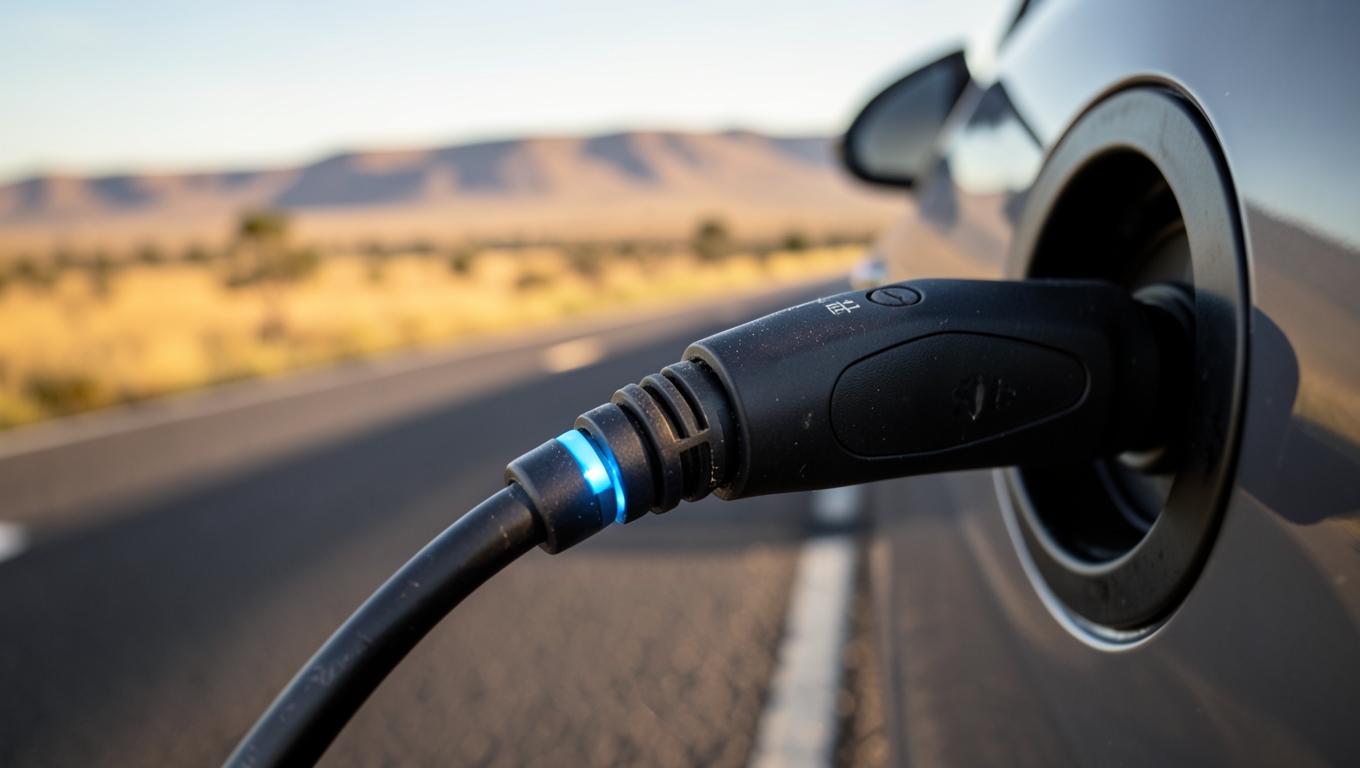
The plug point is where the savings live: charge at home and pay a fraction of the pump price.
Three things collided at once, and none of them are about saving the planet. First, the fuel price did what a decade of awareness campaigns could not. When 95 unleaded crossed R30.25 a litre in Gauteng in October, every commuter with a calculator became an EV researcher overnight. Second, the cars got good and cheap-ish. The arrival of Chinese brands with real range at real prices turned EVs from a Sandton status symbol into something a middle-class family could seriously consider. Third, the sales data started telling the story itself: overall vehicle sales rose 12.7% year on year in September 2026, and the electrified slice is growing faster than everything around it.
Here is the honest framing though: South Africa is still early. Battery and plug-in cars remain a small share of total sales, and the global industry is watching whether South Africa can hold its place in the auto value chain as the world electrifies. That tension, between a country that builds two thirds of its cars for export and a local market that is only starting to plug in, is the real story of 2027.
The EV conversation in South Africa is not about trees. It is about the R30 note you are not handing over every week.
Is an Electric Car Really Cheaper to Run? The R30 Maths
This is where it gets fun, because the numbers finally behave. Charging at home, on a normal municipal tariff, costs roughly R0.60 to R0.80 per kilometre. Public fast charging pushes that to around R1.20 to R1.50 per kilometre, and even DC-only charging stays cheaper than petrol. A petrol car doing 10 km per litre at R30.25 a litre costs roughly R3.03 per kilometre. Run the numbers on a 1,500 km month and the gap is not a rounding error: it is a weekend away.
Cost per kilometre | You pay | A 1,500 km month |
Petrol car (10 km per litre at R30.25) | About R3.03 | About R4,545 |
EV charged at home | R0.60 to R0.80 | R900 to R1,200 |
EV on public fast chargers | R1.20 to R1.50 | R1,800 to R2,250 |
There is a new tailwind too. Under a new pricing model flagged in September, EV charging in South Africa could cost as little as R2.49 per kWh at some points, which for a typical 20 kWh top-up works out to roughly 300 to 400 km of range for the price of a takeaway supper. The catch is the same as always: convenience costs. Home charging is where the savings live, and the EV versus petrol contest in South Africa is decided at your own plug point, not at the mall.
An electric car does not save you money on the road. It saves you money in your driveway, while you sleep.
Can You Actually Drive an EV in South Africa?
Short answer: yes, with a plan. South Africa has roughly 650 public EV chargers spread across about 445 sites, and the country runs around 5,000 petrol stations. That ratio tells you everything. For daily city life in Johannesburg, Pretoria, Cape Town and Durban, the math works comfortably if you charge at home. For the Joburg to Durban December pilgrimage, you plan stops the way you plan the playlist.
The network is filling in fast, and the most interesting builds are off-grid. Along the N3 corridor, solar-powered charging hubs are doubling capacity from 360 kW to 720 kW per hub, with plans heading towards 60 stations nationwide by the end of 2027, and battery storage scaling up alongside the solar. The sun does not load shed, which makes the highveld the perfect place to charge a car. The market is expected to keep expanding as well, with the charging station market growing from under USD 100 million in 2025 towards a third of a billion by 2034.
City commuters: charge at home, top up rarely, smile at the pump.
Intercity travellers: plan the N3 and N1 corridors, where the solar hubs are landing.
Township and inner-city drivers: watch this space closely. Affordable models and shared charging are the next frontier.
Fleet operators: the maths is already good enough to pilot one route and measure it.
What Is the Government Actually Doing About EVs?
More than you might think, and less than the industry wants. Since 1 March 2026, manufacturers investing in EV and hydrogen production can claim a 150% tax deduction under Section 12V, a ten-year window to attract the investment that decides where the next generation of vehicles gets built, with the incentive running to 2036 and a cap in dollar terms for the first year. The policy got real teeth when the investment allowance was confirmed in the Budget, positioning South Africa as a potential EV manufacturing hub for the continent.
But here is the honest bit: there is still no consumer rebate, and buyers get no direct tax break on an EV purchase. The industry has asked for the luxury taxes and import duties that push some EV prices up by nearly a third to be rethought. So if you are waiting for a government cheque to buy your first electric car, do not hold your breath. Calculate the running costs instead, because those savings arrive monthly, no policy required.
For manufacturers: the 150% Section 12V deduction makes South Africa more competitive for EV production investment.
For you as a buyer: no rebate, no subsidy, nothing yet. The buying case has to stand on running costs alone.
For fleet owners: no incentive either, but no fuel levy pain. The business maths is unaffected by policy delays.
What to watch: the APDP2 incentive review and any move on import duties, both flagged as priorities for the coming year.
Government is investing in the factory. Your wallet should invest in the driveway. Both count as electric vehicle strategy.
Is It Time for Your Business to Go Electric?
This is the question we get most from clients, and it is the right one. A business does not buy a car, it buys a cost per kilometre, and when that number drops from over R3 to under R1 on a home or depot charger, routes start redesigning themselves. Delivery fleets, sales reps, service teams: any vehicle that returns to the same base every night is a natural first candidate, because depot charging gives you the home-charging economics on a business scale.
The strategic view matters more than the vehicle choice. Electric mobility is one of the five shifts reshaping the future of business in South Africa, and the businesses winning in 2027 are the ones running small, measured pilots now instead of big announcements later. We wrote about this in our guide to the five shifts reshaping 2027, and the fuel maths in our 2027 preparation guide is exactly why the switch is worth a serious look this year rather than in 2029.
Pilot one route. One vehicle, one depot charger, 60 days of data. Measure rand per kilometre before and after.
Check your power first. A depot charger is a business decision about electricity as much as transport. Size it properly.
Think total cost of ownership, not sticker price. Fuel, servicing, tyres, insurance and resale, all in one number.
Talk to a strategist, not just a dealer. The right vehicle is the one that fits the business model you are building for 2027.
That is the work we do at Social Horde Agency: strategy that moves when you move, grounded in real numbers and real South African conditions. If you want help running the maths on electrifying your fleet, or on any shift reshaping your market, start with our services page, see work we have delivered, read how we think, and book a free strategy call when you are ready. You can also browse every guide on our blog, including how AI adoption is reshaping how businesses operate.
A business does not buy a car. It buys a cost per kilometre. When that number collapses, strategy follows.
The Honest Verdict: Who Should Buy an EV in 2027?
Electric vehicles are not for everyone in South Africa yet, and anyone who tells you otherwise is selling something. But for a growing slice of the market, the maths has already flipped. Here is the brutally honest checklist:
Buy one if: you have secure parking with a plug point, you drive mostly in and around the city, and you have watched your fuel bill the way you watch the rand.
Buy one if: you are a business with vehicles returning to base every night. The depot charger is the whole game.
Wait a year if: you do long unplanned rural routes weekly, and charging planning would drive you up the wall.
Wait a year if: your budget is under R400,000. That segment is coming, and it is coming fast.
Ignore the hype either way. The best car is still the one that fits your real life and your real numbers.
Do not buy an electric car to be fashionable. Buy it to be expensive at the pump exactly zero times a month.
What Should You Do Next?
Start with your own odometer. Add up your monthly kilometres, check what you actually spend on fuel, and then get a quote for a home or depot charger. If the gap between those two numbers makes you smile, you have your answer. If it does not, you have saved yourself a year of explaining charging stops to your family. Either way, you have made a decision with numbers instead of noise, which is more than most of the market manages.
South Africa's EV story in 2027 will be written by people who read the maths early and moved quietly. Whether that is a car in your driveway or a fleet at your depot, the plug-in decision is really a business decision, and it is exactly the kind of decision we help South African businesses get right. The road ahead is quieter, cheaper, and sunnier than most people expect. We will see you on it.
Electric Vehicles in South Africa: Quick Answers
Are electric cars actually cheaper to run in South Africa?
Yes, if you charge at home. Home charging costs roughly R0.60 to R0.80 per kilometre versus more than R3 per kilometre for petrol at current prices. Public fast charging narrows the gap to around R1.20 to R1.50 per kilometre but stays cheaper than fuel.
How much does it cost to charge an EV in South Africa?
It depends on where you plug in. Home charging on a standard municipal tariff is cheapest. Public fast chargers cost more per kWh, and a new pricing model could bring some charging down to as little as R2.49 per kWh for a roughly 300 to 400 km top-up.
Is there enough charging infrastructure in South Africa?
For city driving, yes. There are around 650 public chargers across about 445 sites, compared with roughly 5,000 petrol stations. The N3 and N1 corridors are being built out fast with solar-powered hubs, and 60 stations are planned nationwide by the end of 2027.
Do EV buyers get a tax break in South Africa?
Not yet. The 150% Section 12V tax deduction from March 2026 applies to manufacturers investing in EV production, not to consumers. There is currently no purchase rebate or personal tax incentive for buying an electric vehicle.
What does an electric car cost to buy in South Africa?
Entry-level models now start around the R500,000 mark, with brands like BYD, GWM and Mini bringing real cars at real prices. More affordable options are expected as competition intensifies, which is why buyers on tighter budgets are watching the market.
Should my business switch its fleet to electric vehicles?
Pilot it before you commit. One vehicle, one depot charger, 60 days of measured rand per kilometre. If the route returns to base every night, the savings story is usually strong enough to justify expanding the trial.
Electric vehicles in South Africa are still early, still imperfect, and suddenly very real. Read the maths, plan the plug, and let the fuel receipt be somebody else's problem. That is how you stay ahead without shouting about it, and that is exactly how the quiet ones win.


Comments