How to Prepare for 2027 in South Africa: The Fun Guide to a Calmer, Richer Year

How to prepare for 2027 in South Africa starts with one uncomfortable truth: the year is coming whether your budget is ready or not, and this one arrives with petrol above R30 a litre, a repo rate of 7.25%, a January that feels six weeks long, and at least one tax deadline you will absolutely forget unless you diarise it right now. This is the fun, slightly brutal, very South African guide to walking into 2027 with your money, your tax and your sense of humour intact.
No jargon. No guilt trips. Just the numbers that matter, the dates that bite, and the moves that actually work in this economy. Let us get you 2027-ready before the December madness swallows the calendar.
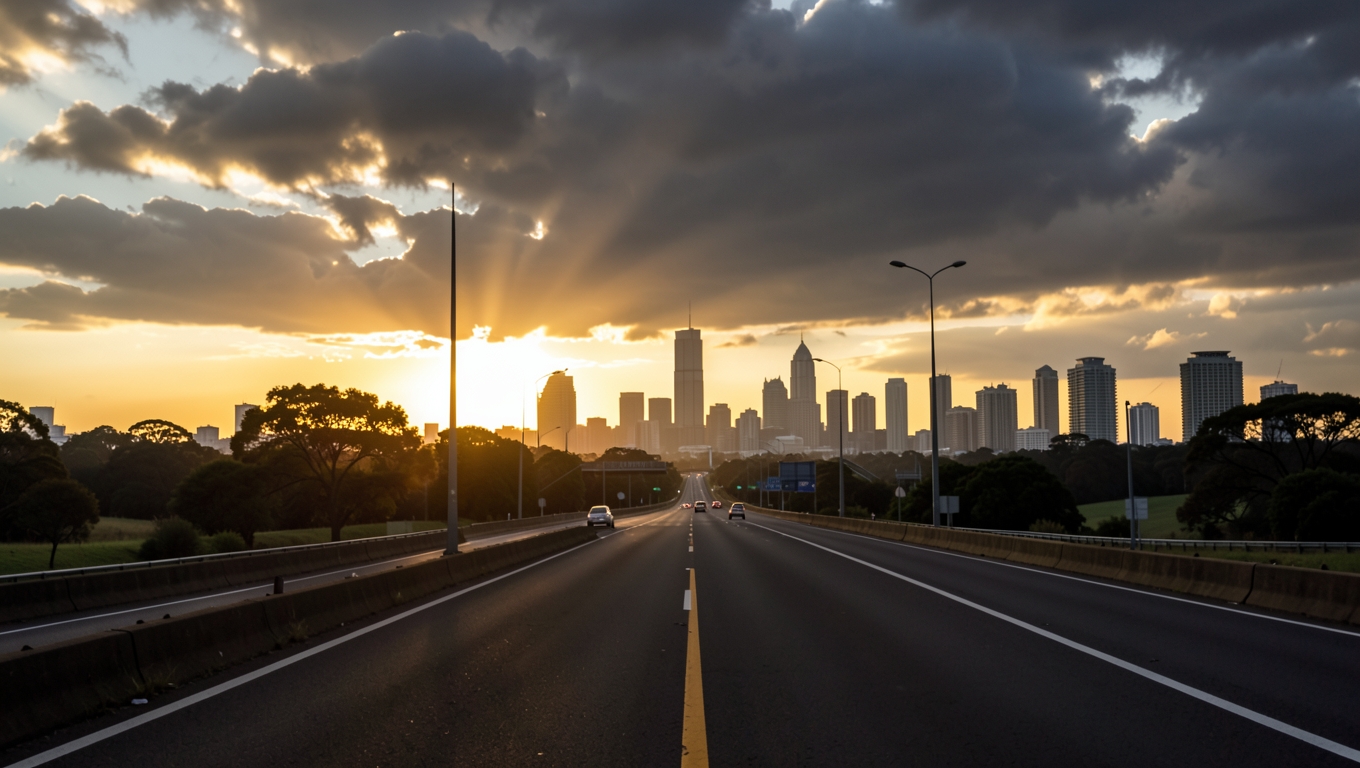
Sunrise over the M1: 2027 is a horizon, not a cliff. You get to choose what you carry into it.
The Short Version: Your 2027 Prep List in 60 Seconds
Budget for the six-week January. If your last payday lands mid-December and the next one only arrives at the end of January, that is roughly six weeks of living funded by one month of money. Plan for it now, not on 3 January.
Diarise every tax date today. Non-provisional taxpayers had until 23 October 2026, while provisional taxpayers and trusts have until 22 January 2027. Miss it and the penalties are monthly.
Think twice about the two-pot withdrawal. The average claim is now around R9,290, and tax takes a bite before the money reaches you.
Rework your transport budget. Petrol hit a record R30.25 a litre in Gauteng in October, and fuel adjusts on the first Wednesday of every month.
Know your school fee rights. If fees eat more than a tenth of your income, the law says you can apply for an exemption.
Pick one money habit to fix. One. The person who fixes one thing for 12 months beats the person who plans ten things for two weeks.
Preparing for 2027 is not about predicting the future. It is about making sure the future does not catch your wallet off guard.
Why Is Everyone Suddenly Talking About 2027?

One hour of planning in November saves three panicked weekends in January.
Because 2026 was a wild ride, and the receipts are still coming in. The South African economy actually contracted 0.2% in the second quarter of 2026 after six straight quarters of growth, according to Statistics South Africa. Unemployment climbed to 33.6%, with youth unemployment at a painful 47.4%. Inflation cooled to 4.3% in July, with food inflation down to just 0.9%, but the Reserve Bank still nudged the repo rate up to 7.25% in September, which means debt is not getting cheaper any time soon.
Add record petrol prices, an Eskom tariff hike of 8.76% and a rand doing cardio, and you get a nation that is cautious but determined. The good news? South Africans are famously good at making a plan. This guide is that plan, in writing.
How Do You Beat Januworry Before It Beats You?
Every December, millions of us get paid early, feel rich for two weeks, and then meet Januworry at the door like an uninvited relative. The numbers behind it are sobering. In the first quarter of 2026, 96% of debt counselling applicants had a personal loan and 61% had a one-month or payday loan, both record highs, and the average applicant needed 64% of their take-home pay just to service debt. Meanwhile, non-bank personal loans grew 19% year on year, with Gen Z accounting for more than half of new originations. Januworry is not a mystery. It is arithmetic.
The fix is boringly simple, which is why nobody does it. Set aside a December buffer before the festive season starts. Write down what you will NOT buy. And remember that Black Friday in South Africa is now a real event: local e-commerce businesses pulled in R144.6 million between 1 November and 1 December 2025, up 5.4% year on year, and most of that money went to people selling things people genuinely wanted. Be the buyer with a list, not the buyer with a feeling.
Name your January number. Add up rent, food, transport, school costs and debt payments for January, then set aside that amount in November and December.
Give December a spending cap, not a vibe. A fixed number feels restrictive for five minutes and generous for five weeks.
Delete the one-tap credit. If the app makes borrowing a reflex, remove the reflex. Friction is a feature.
Shop with a list on Black Friday. A deal on something you did not need is not a deal. It is a donation.
Januworry is not a month. It is a decision you make in December.
What Are the Tax Dates You Cannot Afford to Miss?
The taxman does not do vibes. He does dates, and he charges by the month when you miss them. For the 2026 filing season, non-provisional individual taxpayers had until 23 October 2026 to file, while provisional taxpayers and trusts have until 22 January 2027. If you are a provisional taxpayer, that January deadline is the one that catches people, because it lands in the same month as Januworry, school fees and every other bill.
And the penalties are not gentle. SARS can charge an administrative non-compliance penalty of between R250 and R16,000 per month, depending on your taxable income, and it can keep running for up to 35 months while the return stays outstanding. If you receive an auto-assessment, check it properly before you accept it, because accepting the wrong number quietly turns into paying the wrong number.
Date | What it means for you |
23 October 2026 | Deadline for non-provisional individual taxpayers to file their returns |
22 January 2027 | Deadline for provisional taxpayers and trusts |
28 February 2027 | Tax year ends, and the current two-pot withdrawal window closes |
1 March 2027 | New tax year begins, and a fresh two-pot withdrawal window opens |
First Wednesday of every month | Fuel price adjustment. Mark it and check it |
The taxman does not do vibes. He does dates.
Should You Dip Into Your Two-Pot Savings in 2027?
The two-pot retirement system has changed how South Africans think about their savings, and the withdrawal window runs from 1 March 2026 to 28 February 2027, with a new window opening on 1 March 2027. Early data shows what people are actually doing with it. According to analysis of administrator data, the average claim has dropped from R12,666 in September 2024 to around R9,290 in March 2026, and 71% of claims are for less than R10,000. Most of that money is going to short-term liquidity: debt repayment, school fees and medical emergencies.
Here is the honest framing. The money is real money, but it belongs to a version of you who is 60 and tired, and every rand you take out today is a rand that stops compounding for the next thirty years. If you do withdraw, remember the tax is withheld before the money reaches you, and if you owe SARS, they will help themselves first.
Withdraw for emergencies, not for lifestyle. A car service you forgot is not an emergency. It is a date you missed.
Run the tax numbers first. A R10,000 withdrawal does not deliver R10,000 to your bank account.
Make it a once-a-year decision, not a habit. The rules allow one withdrawal per tax year, and habits compound too.
Fix the reason you need the money. If the pot is your Plan B, the budget still needs a Plan A.
The two-pot money is real money. It just belongs to a version of you who is 60 and tired.
How Do You Survive Petrol at R30 a Litre?
When petrol in Gauteng crossed R30 a litre for the first time in October 2026, with 95 unleaded at R30.25, every commute, school run and delivery route got more expensive at once. The forecasts had warned that record prices were coming, and analysts flagged the pressure on household budgets well before the pumps changed. Fuel is not a small line item anymore. For many households it is the third-biggest cost after housing and food.
The countermove is a transport plan, not a hope. 2027 rewards the ones who plan the week on Sunday night instead of improvising at 6am on Monday.
Combine trips ruthlessly. One planned circuit beats four spontaneous dashes. Your tank will notice before your stress levels do.
Try the lift club, for real this time. Two families sharing one school run can cut that cost nearly in half.
Check the taxi maths honestly. With fare increases flowing through after fuel hikes, some routes are now cheaper by taxi, and some are not. Test it for one week.
Keep the car healthy. Correct tyre pressure, clean filters and sensible servicing quietly save more than any driving hack.
At R30 a litre, the cheapest car in South Africa is the one you already own, driven a little less.
What About School Fees for 2027?
School fee letters start landing in October, and 2027 will not be cheaper. But here is what many parents do not know: if the fees at a public school exceed 10% of your combined income, you can apply for a full fee exemption, and if they fall between 3.5% and 10%, you may qualify for a partial exemption. Exemptions are not automatic, so you have to apply, and the application is worth every minute you spend on it.
Do the percentage maths. Fees divided by total household income. If it clears 10%, you have a case.
Apply in writing, early. Ask the school for the exemption form, attach proof of income, and keep a copy.
Remember the extras are negotiable. Contributions labelled voluntary are exactly that.
Budget the stationery run in December. The January stationery scramble costs more than the same items bought calmly in early December.
School fees are not a personality test. If the school fees eat more than a tenth of your income, the law is on your side, and paperwork is cheaper than pride.
What Should Businesses Do to Win in 2027?
If you run a business, the same forces that squeeze households squeeze your customers, and the winners in 2027 will be the businesses that get simpler, faster and easier to find. Retail sales grew 1.6% year on year in June 2026, which tells you the pie is barely growing, so share has to come from somewhere. Meanwhile debt review data shows consumers restructuring instead of spending freely, which means the businesses that win are the ones that make every rand feel worth it.
There is also a quieter shift happening in how customers find you. Buyers increasingly ask AI assistants for recommendations before they open a website, which is why the businesses with clear, quotable, well-structured answers are the ones that get named. That is exactly the work we do: strategy that moves, visibility that compounds, and AI adoption handled with a plan instead of a panic. You can browse what we deliver on the services page, see work we have delivered, read the standards we hold ourselves to on the about page, and book a free strategy call when you are ready.
Get your prices visible and honest. In a value-conscious market, mystery pricing sends customers to your competitors.
Make January cash-flow your October homework. Chase outstanding invoices in November, not in the third week of January.
Cut one cost properly. A proper fuel and route plan for your team beats a vague instruction to tighten belts.
Be quotable. Put your best answers where customers and AI assistants can find them. Start with the guides on our blog, like the five shifts reshaping the future of business and how AI adoption actually works in South Africa.
Businesses do not get 2027-ready by predicting the future. They get ready by preparing for the customers the future is bringing.
The 2027 Readiness Checklist: Old Habits vs New Habits
The 2026 habit | The 2027 upgrade |
December spending on feelings | A written December cap and a January fund |
Filing tax when the panic hits | Every SARS date in the phone calendar on 1 November |
Treating the two-pot as a wallet | An emergency-only rule with the tax maths done first |
Filling the tank and hoping | A weekly route plan and a lift club with actual names on it |
Paying school fees and staying quiet | Checking the exemption rules every January |
Waiting for customers to find you | Being visible, quotable and easy to buy from |
Look at that list again. Every single upgrade costs time and judgement, not money. That is the whole trick of preparing for 2027: it is a discipline game disguised as a money game.
What Should You Do Next?
Pick your first move this week, not in January, because January is where plans go to die. Write the December cap. Diarise 22 January. Do the school fee percentage. Check the two-pot maths before you touch the pot. Plan the fuel week on Sunday night. And if you run a business, book the strategy conversation you have been postponing, because the quiet months are the best time to build.
The whole team at Social Horde Agency exists for this exact season: helping South African businesses and the people who run them walk into a new year stronger, calmer and readier than the competition. You can talk to us here, or start with the wider view on our blog. Either way, do the first thing this week. Future you is already grateful.
How to Prepare for 2027: Quick Answers
What is the single most important thing to do before 2027?
Fund January before December starts. The six-week gap between a mid-December payday and the end-of-January payday breaks more budgets than any other single event, and it is the one you can actually plan for.
How much should I budget for the December holidays?
Decide the number before the season starts, then withdraw it in cash or park it in a separate account. If the money is not visibly finite, December will spend it and January will explain it.
When can I withdraw from my two-pot savings pot again?
The current window closes on 28 February 2027, and a new window opens on 1 March 2027. You can make one withdrawal per tax year, subject to the minimum of R2,000, and tax is withheld before the money reaches you.
What happens if I miss the SARS deadline?
SARS can impose an administrative penalty of R250 to R16,000 per month, depending on your taxable income, and it can keep running for up to 35 months. File early, or ask a tax practitioner to help you file properly.
Is it worth buying a car with petrol above R30 a litre?
Only if the total cost of ownership works at today's fuel price, not last year's. Add fuel, insurance, tyres and servicing for your actual monthly kilometres before you sign anything. A smaller, cheaper car is usually the smarter 2027 decision.
How do I start preparing for 2027 if my budget is already tight?
Start with the free moves: diarise the tax dates, apply for the school fee exemption if you qualify, plan your routes, and put a cap on December. Tight budgets are fixed by small decisions made early.
Preparing for 2027 in South Africa is not about being wealthy. It is about being ready. Do one thing today, another one next week, and by the time the fireworks go up over the Highveld, you will be the calm one at the braai, quietly ahead of the game.


Comments