From Garage to Banking Royalty: What LekkeSlaap Teaches South African Brands

LekkeSlaap, the Afrikaans booking platform that started in a Cape Town garage with R12,000 and just sold to a consortium of South African banking royalty, is the best branding lesson any South African business will read this year. It is a story about two guys in their twenties, a name nobody else would have chosen, and a stubborn belief that local could beat global. If you run a business in this country and you have ever wondered whether a small brand can take on a giant, this one is for you.
No jargon, no boardroom theory. Just what actually happened, why it worked, and what you can steal for your own brand this quarter. Bring a coffee, this is a lekker one.
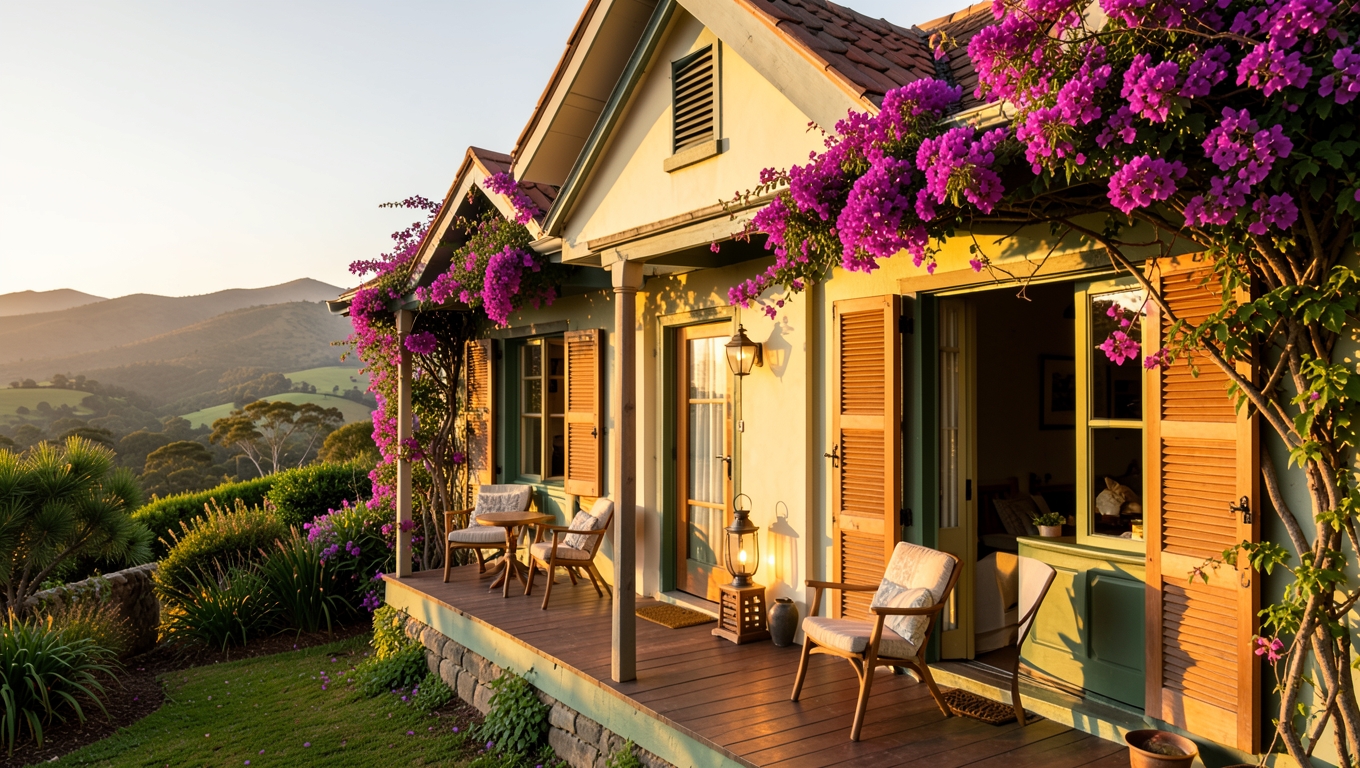
South African hospitality, South African brand: the guesthouse stoep that a garage startup turned into a national business.
The Short Version: The LekkeSlaap Story in 60 Seconds
The garage beginning. Jonathan Womersley and Marcel van de Ghinste started building their first booking site in 2009 with just R12,000, launching with 300 guesthouses and B&Bs.
The name everyone else would have avoided. LekkeSlaap is a shortened Afrikaans phrase meaning "sleep well". They launched it in 2013 as South Africa's first Afrikaans leisure booking platform, and it became so successful it replaced their original English brand entirely.
The giant they held off. Airbnb entered South Africa in 2015. LekkeSlaap not only survived, it grew into the country's largest locally owned accommodation platform with over 7 million guests served.
The exit. In October 2026, the founders sold to a consortium including Investec and the family offices of two of South Africa's most prominent bankers, ending a 17-year run.
The lesson. Local does not mean small. Specific beats generic. And a brand built on real cultural insight is worth holding on to, even when a global giant parks in your driveway.
They did not build a South African version of an American website. They built a South African website that Americans had to learn to say. That is the whole story.
From Garage to Banking Royalty: What Actually Happened?
Every great brand is a promise somebody keeps: the key is handed over, the stay is lekker, the guest comes back.
The details matter, because they are so ordinary they are almost unbelievable. According to MyBroadband's account of the founding story, Womersley and Van de Ghinste met at UCT in 2001, one an engineering student, the other a dropout who went into sound engineering. In March 2009 they started building an online bookings website in a garage, onboarding guesthouses one by one. By September they had launched with 300 establishments.
Slow growth, four years, 18 more people. Then in 2013 came the move that changed everything: they launched LekkeSlaap as South Africa's first Afrikaans leisure accommodation booking platform, and it resonated so hard that the Afrikaans brand eventually swallowed the original company whole. Today the platform lists over 38,000 accommodation establishments, employs 170 people, and has been named South Africa's Leading Online Travel Agency at the World Travel Awards for three consecutive years.
Then came October 2026. Launch Base Africa reported the acquisition: a consortium of South African investors including Investec and the family offices of GT Ferreira and Laurie Dippenaar, banking names most South Africans know instantly. After 17 years, the founders exited. Not to a Silicon Valley giant, not to a faceless fund. To South African capital, buying a South African brand, built for South African travellers.
Milestone | The number |
Starting capital, 2009 | R12,000 |
Launch inventory | 300 establishments |
Afrikaans platform launched | 2013 |
Airbnb enters South Africa | 2015 |
Guests served to date | Over 7 million |
Accommodation listings today | 38,000+ |
Team | 170 staff |
Exit | October 2026, SA investor consortium |
Why Did an Afrikaans Name Beat a Global Giant?
Because it was not a name. It was a door. When you say "LekkeSlaap" to a South African, especially an Afrikaans-speaking one, you are not describing a service. You are saying "sleep well" in the language of their family holidays, their farm visits, their road trips to the Karoo. The brand felt like it had always been there, the way a good guesthouse does: quietly familiar, impossible to fake.
That is the deep insight most businesses miss. LekkeSlaap did not win because it out-engineered booking engines or outspent anyone on ads. It won because it understood a customer segment so specifically that the product felt custom-built for them, because it genuinely was. The English giants offered the whole world. LekkeSlaap offered their people.
The name did the marketing. An Afrikaans phrase for "sleep well" told a whole community this platform was built for them.
The niche came first. They owned one audience completely before broadening to everyone.
The English platform followed, not led. Their original brand was eventually absorbed by the Afrikaans one that outperformed it.
The outsiders still came. Bilingual service later opened the door to English and international travellers on LekkeSlaap's terms.
And there is real evidence that this "local first" instinct pays. In a 2026 GeoPoll survey of 2,403 consumers across Kenya, Nigeria and South Africa, 49% said it is "very important" that a product is made in Africa or in their own country, and only 4% said it does not matter at all, with the sentiment strongest right here in South Africa.
Global brands sell to everyone. Local legends sell to someone. The second one is harder, rarer, and worth a lot more.
What Made the Brand So Hard to Kill?
Airbnb arrived in 2015 with a war chest, a global brand and a beautiful app. LekkeSlaap did not fold. Why? Users and hosts consistently point to four things: competitive pricing, an enormous selection, high-quality customer support, and a reasonable commission structure for hosts. Read that list again. Not one item is about being clever. Every item is about being decent and useful.
That is the unglamorous truth of durable brands. The moat is not the logo. It is the trust, and trust compounds in boring ways, one happy host and one smooth booking at a time. When Kantar published its 2026 BrandZ ranking of South Africa's most valuable brands, the combined value of the ranking had grown 47% since 2024 to reach USD 44 billion, and the report's strongest finding was that "Meaningful Difference" is the biggest driver of growth: 74% of South Africa's most valuable brands are seen as meaningfully different, and those brands grew twice as fast as those lacking that edge. The data agrees with the gut. Different beats bigger.
Trust beats tech. A booking that works and a helpline that answers outperforms a feature list.
Hosts are the product. Look after the supply side (the guesthouses and B&Bs) and the customers follow.
Fairness is strategy. Reasonable commissions kept hosts loyal through the years Airbnb went hunting.
Specificity scales. A brand built for one group first can later welcome everyone. The reverse order almost never works.
LekkeSlaap's moat was never the website. It was 38,000 hosts and 7 million good sleeps. You cannot download that.
What Do South African Buyers Actually Reward Today?
This is where the story stops being nostalgia and starts being a plan, because the market the LekkeSlaap founders read so well in 2013 has some clear modern tells. The Stitch 2026 consumer report, based on a survey of 3,000 South Africans, found that 74.6% of consumers prefer to shop directly on brand websites, ahead of retailer sites at 68% and marketplaces at 61.8%, and that 48.5% now shop on international platforms like Temu and Shein. Translation: the fight for the South African wallet is now a fight for brand trust at the exact moment cheap imports are flooding in. 76% of online shoppers spend more than R2,000 a month digitally, and nearly a quarter spend over R10,000. The money is moving. The question is whose name is on the transaction.
The digital market rewards the brave too. South Africa has 29.1 million social media user identities, a penetration of 44.9%, growing 15.2% year on year, but organic reach on Facebook brand pages has collapsed to under 5%. That means posting harder is not a strategy. Being worth searching for is. Studies show 63% of customers are more willing to buy from familiar brands, and small businesses are 23% more likely than average to see ROI from blog content. Familiarity is manufactured through consistency, not volume.
What South Africans reward | The 2026 evidence |
Brands they can buy from directly | 74.6% prefer brand websites over marketplaces |
Local origin | 49% say made-in-Africa is very important |
Familiarity | 63% more willing to buy from brands they know |
Meaningful difference | 74% of SA's most valuable brands are seen as meaningfully different |
Digital spend is real | 76% of online shoppers spend R2,000+ per month online |
South Africans are not loyal to cheap. They are loyal to familiar, and familiar is built with a specific name, a specific promise, and years of keeping it.
What Can Your Brand Steal from This Playbook?
Everything, and none of it requires a garage. Here is the LekkeSlaap playbook, translated for any South African business, whether you are a consultancy in Sandton, a restaurant in Soweto, or a service business in Durban.
Pick a someone, not everyone. LekkeSlaap chose Afrikaans travellers first. Who is your "someone"? The sharper the answer, the faster the growth.
Own your language. Speak the way your customers actually speak, even if it means a name that needs explaining to outsiders. Explained names are remembered names.
Look after your supply side. Your hosts, partners, drivers, and staff are the product. Treat them fairly and they defend you when giants arrive.
Be boringly reliable. Answer the phone. Reply to the WhatsApp. Deliver what you promised. This is 90% of brand building and almost nobody does it consistently.
Publish what you know. In the AI era, a business that explains things clearly gets found and quoted. Free value is the cheapest advertising that still works.
If that list sounds like strategy, that is because it is. This is exactly the work we do at Social Horde Agency: strategy and direction for where you are going, brand and voice so you sound like you, growth and visibility so the right people find you, and creative and content that stops the scroll and starts the conversation. We have written before about the five shifts reshaping the future of business in South Africa and about how AI adoption is changing the game for local companies, and the through line is always the same: be specific, be real, be found.
How Do You Build a Brand That Outlasts the Giants?
The giant is already in your market, whatever you sell. Airbnb came for guesthouses. Temu came for retail. Some AI-powered version of your competitor is being built right now. The LekkeSlaap answer, and the one the data keeps confirming, is not to fight scale with scale. It is to fight scale with meaning.
Define your someone in one sentence. If you cannot, your marketing cannot either.
Write down your promise and keep it monthly. Brand is a verb. It happens every week or it does not happen.
Build a home base you own. Your website and email list are the only platforms nobody can switch off or charge you twice for. Use social to attract, your own site to convert.
Invest in being quotable. When customers ask AI assistants for recommendations, businesses with clear, structured, human answers get named. The rest get skipped.
Think in years, not months. Seven million guests is not a quarter. It is 17 years of compounding, and it ended in banking royalty.
The garage is optional. The R12,000 is optional. The specificity, the consistency and the decency are not.
What Should You Do Next?
Start with one sentence: "We exist for ___." Fill it in with a real person, not a demographic. Then audit the last 90 days of your brand: did your posts, replies, quotes and invoices all sound like the same business? Did you answer fast? Did you deliver? If yes, keep compounding, because you are already doing the hard part. If not, that is your next quarter's project, and it matters more than any campaign you could run.
And if you would rather not figure it out alone, that is what we are here for. Come look at work we have delivered, how we think about this market, and book a free strategy call to talk about your brand's next 17 years. You can also browse every guide on our blog for more plainly-spoken South African strategy. The giants are coming anyway. The LekkeSlaap story proves they can be beaten by two people in a garage with a great name and a better promise.
The LekkeSlaap Story: Quick Answers
What is LekkeSlaap?
LekkeSlaap is South Africa's largest locally owned online accommodation booking platform, founded in 2013 as the country's first Afrikaans leisure booking site. The name is a shortened Afrikaans phrase meaning "sleep well". It lists over 38,000 establishments across Southern Africa.
Why was LekkeSlaap sold?
The founders, Jonathan Womersley and Marcel van de Ghinste, exited after 17 years when a consortium of South African investors including Investec and the family offices of GT Ferreira and Laurie Dippenaar acquired the business in October 2026. Both founders will remain involved as board members and advisors.
How did LekkeSlaap compete with Airbnb?
By owning a specific segment completely. Airbnb arrived in 2015, but LekkeSlaap won loyalty through competitive pricing, a huge selection of local establishments, strong customer support and reasonable commissions for hosts. It was named South Africa's Leading Online Travel Agency at the World Travel Awards three years running.
What branding lesson does the LekkeSlaap story teach?
Specific beats generic. A brand built for one group first, in that group's own language, can grow bigger than a generic brand that tried to speak to everyone. Add consistency and fairness, and you build a moat no global giant can buy.
Is "local" really a selling point in South Africa?
Yes, and the data is unusually clear. In GeoPoll's 2026 consumer research, 49% of South African consumers said it is "very important" that products are made in Africa or locally, and only 4% said it does not matter. Stitch's 2026 report also found 74.6% of shoppers prefer buying directly from brand websites over marketplaces.
I run a small business. Is this really achievable for me?
More achievable than ever. The LekkeSlaap founders started with R12,000 and one channel. Pick a specific audience, speak their language, keep your promises consistently, publish genuinely useful content, and let the compounding do the work. That is a strategy any size of business can run.
LekkeSlaap sold for undisclosed millions built on a R12,000 idea, and the playbook it leaves behind is free: be specific, be useful, be consistent, and be proudly local. The next garage story in this country is being written right now. There is no reason it cannot be yours.


Comments