AI Voice Agents in South Africa: What They Do and What They Really Cost

AI voice agents are being switched on across South African call centres, salons, plumbing companies and law firms right now, and the country has quietly become one of the most interesting voice markets in the world. Voice is still how most customers make first contact, the accents and languages break tools built for America, and the businesses that get the pilot right recover calls they were losing every single week.
This guide explains what an AI voice agent actually does, why South Africa is such a demanding test, what these agents can handle for a small business, what they cost in published rand pricing, what POPIA requires, and how to run a thirty-day pilot without ripping out your phone system.
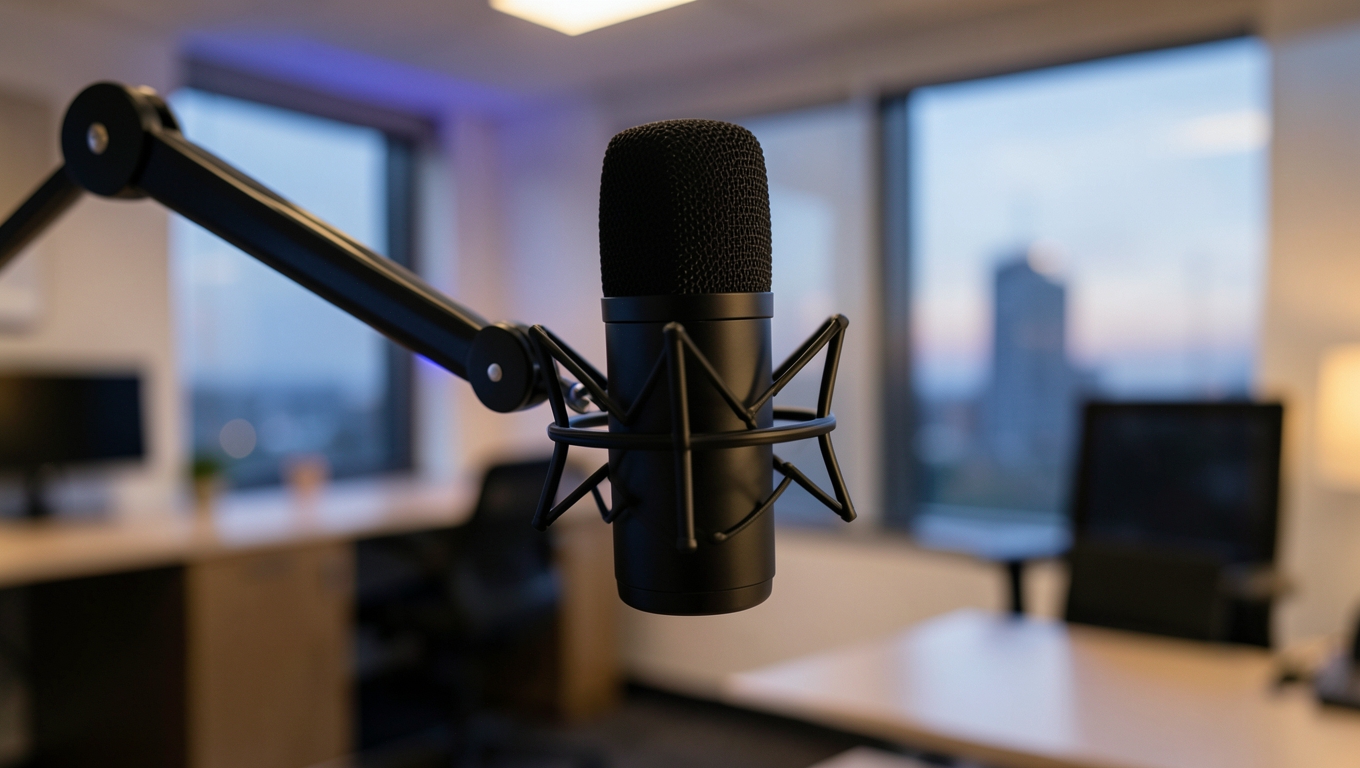
A voice agent is judged in the first four seconds. That is where local builds win and imports stumble.
The Short Version: AI Voice Agents in 60 Seconds
The money is moving. Gartner projected that conversational AI would cut contact centre agent labour costs by 80 billion US dollars by 2026, with roughly one in ten interactions automated.
Voice is the fastest-growing channel. Voice AI now handles around 19 percent of inbound contact centre volume, up from 6 percent in 2024, and AI resolutions cost a fraction of human ones.
Customers expect instant answers. Zendesk's 2026 research found 74 percent of consumers now expect customer service to be available around the clock because of AI, and most expect a clear path to a human when they ask for one.
But imports keep failing on accents. TechCentral reports that researchers and local vendors see imported agents misreading accents, latency and South Africa's languages, which is the whole game in a voice-first market.
Published local plans exist. A verified South African buyer's guide lists AI receptionist plans from around R849 to R7,500 a month against R8,000 to R15,000 for a human receptionist, which makes the comparison concrete for the first time.
Customers are already comfortable. Seventy percent of South African adults have used an AI chatbot, and voice is simply the next channel they expect to work as well.
A voice agent does not replace the way your business sounds. It decides whether anyone hears it at 18:40 on a Friday, when the calls you cannot take are worth the most.
How Does an AI Voice Agent Actually Work?

The best voice agents answer the calls you already lose: after hours, at peak, and on the second attempt.
When a call lands, the audio streams to a speech-to-text engine, a language model reads the transcript alongside a brief describing your business, and a text-to-speech voice replies on the line. A working agent answers in roughly 800 milliseconds to 1.5 seconds, checks a real calendar or order system, and either resolves the query or hands the caller to a person with the context already loaded.
The brain: a language model that interprets intent and decides the next step in the conversation.
The ears and mouth: speech recognition and a natural voice, and in a good local build, one that handles South African English properly.
The memory: your calendar, booking system, CRM or order data, which is what separates a working agent from a talking menu.
The escape hatch: a clear, fast route to a human the moment the caller asks for one or the agent loses confidence.
The leash: permissions deciding what the agent may confirm, commit or change without approval.
One number matters more than most vendors admit. South African contact centre specialists put the conversational sweet spot at about 400 milliseconds of response time: faster than 300 milliseconds sounds abrasive, slower than 700 and the caller knows they are talking to a machine that cannot keep up. International server hops eat that budget, which is why routing matters here more than model choice.
The technology is not the hard part anymore. The hard part is latency, accent and the discipline to pilot one narrow use case instead of replacing everything at once.
Why Is South Africa Such a Demanding Market for Voice AI?
Three reasons, all visible in the local research. First, accents and code-switching: UCT researchers found nine of the country's eleven official languages still fall into the low-resource category for AI systems, and even the local models being built now, such as the university's MzansiLM, acknowledge that Sepedi and isiNdebele remain severely underrepresented. When a caller switches mid-sentence between English and isiZulu, imported agents simply drop the thread.
Second, routing and data residency. Keeping calls on a South African exchange cuts both latency and cost, and it answers the question every POPIA-conscious buyer asks: where does the recording live? Local providers such as Telviva build compliance into the architecture and host in local data centres, which is becoming table stakes rather than a premium feature.
Third, the trust stakes. The same research flags that convincingly South African voice agents are also a fraud tool, so identity checks and disclosure are not optional extras. A voice-first market rewards well-built agents and punishes sloppy ones faster than any chat channel.
Every foreign voice demo sounds impressive until the caller says a street name in Benoni or answers in Afrikaans. Test with real local callers before you sign anything.
What Should a Voice Agent Handle First?
The deployments that earn their keep are narrow. Pick the call type you currently handle worst and let the agent own exactly that.
Call type | Good first job? | The guardrail |
After-hours and overflow calls | Yes, the classic starting point | Message capture and booking only, no commitments |
Appointment booking and rescheduling | Yes, when it reads a real calendar | Human review of anything unusual |
Order status and delivery queries | Yes, in retail and e-commerce | Escalate complaints untouched |
Routine account or balance questions | Only with authentication done properly | Identity checks before any detail is shared |
Lead qualification | Yes, with clear scoring rules | A person owns every promised follow-up |
Complaints and sensitive conversations | No, route to humans immediately | Agents close nothing emotional |
Start with the calls you already lose. The missed call at peak, the Sunday enquiry, the second attempt that never happens.
Keep the human front door if it matters to you. Many strong local businesses run a hybrid: people in office hours, the agent after hours and on overflow.
Measure recovered calls, not demo polish. The number that decides the pilot is calls answered, bookings made and enquiries rescued.
Give the agent a clear identity and an exit. "You are speaking with an automated assistant, and I can put you through to a person at any time" costs nothing and builds trust.
The best first voice agent sounds like your business on a good day and knows exactly when to hand the phone to a person.
What Do AI Voice Agents Cost in South Africa?
For the first time there is published local pricing to argue with. South African AI receptionist plans currently run from about R849 a month at the entry level, with per-minute billing on top, up to around R7,500 a month for unlimited-minute packages, while a human receptionist typically costs R8,000 to R15,000 a month before leave cover and missed calls. Hybrid models, where a person covers office hours and the agent takes the rest, land between the two.
Option | Monthly cost | Coverage reality |
Human receptionist | R8,000 to R15,000 salary band | Office hours, one call at a time, leave and sick cover gaps |
AI voice agent (published SA plans) | From about R849 to R7,500, plus per-minute usage on some tiers | 24/7, multiple calls at once, no leave |
Hybrid (agent plus part-time desk) | Often R3,000 to R8,000 | People when it matters, the agent for the volume |
Ask for the three cost lines. Telephony minutes, AI processing per minute, and build or management fees. If a quote does not separate them, it is not a rand-defensible quote.
Setup runs one to four weeks for packaged local platforms, longer for custom builds with deep system integration.
Beware the bolted-on trap. An AI layer stacked on old telephony without rethinking routing accumulates latency at every step.
Budget for oversight. Someone should review transcripts and tune the agent monthly, the same way you would coach a new hire.
Compare the agent to the calls you currently miss, not to a perfect receptionist you do not have. That comparison is the only one that survives contact with a real month.
What About POPIA and Call Recordings?
Your business remains the responsible party under POPIA; the voice provider is an operator acting on your instructions, which means the compliance work is yours to verify. The Information Regulator's guidance is the starting point, and the practical checklist is short: a data processing agreement with the provider, a defined retention period for recordings and transcripts, and a clear answer to whether call data is processed inside South Africa or shipped to an overseas model.
Disclose early. Open the call with a recorded notice that it may be answered and processed by an AI system, which protects the lawful-basis question.
Minimise and secure. The agent should see the least data it needs, and recordings should expire on a written schedule.
Check cross-border transfers. Overseas models are not forbidden, but they need to be disclosed and justified.
Keep the paper trail. For a fuller picture, read our plain-language guide to POPIA for small businesses.
POPIA does not change because software answers the phone. It just becomes easier to ignore, which is exactly why it matters.
How Do You Pilot One in Thirty Days?
Choose one call type you currently handle worst: after-hours enquiries, overflow, or a repetitive status question.
Demand a live test with real South African callers, including one accented speaker and one mid-sentence language switch. If the provider only demos in a US voice, treat that as the answer.
Insist on local routing or at least a latency commitment under 1.5 seconds, and ask where the recordings live.
Run it beside the old way for thirty days, measuring recovered calls, bookings and abandoned-call drop.
Review at day thirty: expand permissions only where the numbers justify it; switch off what did not earn its place.
One narrow pilot with a kill date teaches you more than six vendor demos, and it costs a fraction of a bad annual contract.
What Should You Do Next?
This week, pull your call log and count three things: calls that went unanswered, calls that came after hours, and calls that were simple status questions. If that list is longer than you expected, a voice agent deserves a thirty-day experiment. If you want help designing the pilot, choosing between local platforms, or connecting a voice agent to the rest of your operations, that is the work we do: see what we deliver on the services page, look at work we have shipped, read how we think about this market, and book a free strategy call. You can also read our plain-language guide to AI agents, how WhatsApp fits a South African sales process, and what POPIA asks of small businesses, or browse every guide on our blog.
AI Voice Agents in South Africa: Quick Answers
What is the difference between a voice agent and an IVR menu?
An IVR forces callers through fixed options. A voice agent understands natural speech, answers questions, checks real systems like calendars or order data, and either completes the task or hands over with context. The experience feels like a competent assistant rather than a maze of numbers.
Can AI voice agents understand South African accents?
The best local builds handle South African English well in most cases, and Afrikaans and isiZulu coverage is improving quickly, but heavy accents and mid-sentence code-switching remain the failure modes. Insist on a live test call with real local speakers before you commit to anything.
Are AI voice agents POPIA compliant?
They can be, with three requirements met: a data processing agreement with the provider, a defined retention period for recordings and transcripts, and disclosure that the call is handled by an AI system. Whether data is processed locally also matters, and it is fair to insist on a clear answer.
How much does an AI receptionist cost in South Africa?
Published local plans currently range from around R849 a month with per-minute billing on top, to roughly R7,500 a month for unlimited-minute packages, against R8,000 to R15,000 a month for a human receptionist. Setup typically takes one to four weeks for packaged platforms.
Will a voice agent annoy my customers?
Bad ones do, fast. The annoyance comes from latency, robotic accents and hidden human handoffs. A well-built agent answers quickly, sounds natural, identifies itself, and offers a person immediately on request, which is exactly why testing with real callers matters more than demo polish.
What is the best first use for a voice agent?
After-hours and overflow calls, or a single repetitive call type such as bookings or order status. Start narrow, measure recovered calls for thirty days, and expand only where the numbers justify it.
A voice agent is not a gimmick and not a receptionist in a box. Handled with the same discipline as hiring, it is one of the few upgrades in business that pays for itself in calls you were already losing.


Comments